Monday, August 20, 2012

The Martial Arm Martial Arts Share Facebook Google Plus


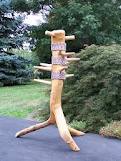
The Martialarm is a training device that gives a workout and develops your side fighting long range skills. Long range is the first entry into your opponents space. Getting into your opponent or enemies space safely and effectively ends the fight in your favor. Or if not yet successfully ended, the fight now progresses into shorter range fighting like the Wing Chun Kung Fu style of combat.

The Wooden dummy is the traditional wing chun kung fu martial arts training partner since the start of wing chun in China. The Wooden Dummy with a Martialarm attached makes the ultimate long range and short range combat and workout partner.


Please Facebook us or tweet a comment about us! 
Tweet or add us to your Google Circles .


Wooden Dummy
The Martialarm

Sunday, August 19, 2012

Eskrima Martial Arts Training 1yr Course Cebu Philippines

5 obvious reasons for coming to train with us in the Philippines

Arnis - Northern Philippines | Eskrima - Central Philippines | Kali - Southern Philippines - Advanced Balintawak Course Available!

1. Cebu Island in the Philippines probably has more Grandmasters per capita of anyplace on planet Earth. Here we have Fathers who taught sons who in turn taught their sons and in turn their sons. A true authentic lineage in martial arts excellence only now, within the last few years, is this knowledge available to be learnt by Westerners.

2. The Philippino martial arts systems are designed for real self defense forged over hundreds of years of life and death battles between the competing islands and clans. The Filipino martial arts systems are unique, sophisticated and devastating in effect. This is not an exercise or a dance lessons designed as martial arts for kids often found in the West.

3. Most martial arts training in the Western World is available twice a week perhaps a one hour lesson. Compare that to the rapid progress you can make here with our training facility. We have numerous Grandmasters and Masters training here between 2 to 4 hours everyday ready and waiting for your attendance. Become an Eskrima BlackBelt within a year with our intense training program.

4. The Philippines martial arts are extremely practical. They start with weapons like the stick, sword and knife and work through to hand to hand techniques all using the same methodology. This is a complete system not a hodge podge of mixed martial arts styles. These systems are not overly fancy and do not require any acrobatics in their moves. Anybody in any physical shape can gain from our classes - all body styles, any age at any skill level will find our training riveting, exhilarating and intensely practical.

5. Our training is very moderately priced. Under $2000 per year allows you to involve yourself up to four hours per day training, with various masters and their varying systems. Living in the Philippines is also cheap and we arrange a one year visa from $300 and simple and practical accommodation for $120 per month. Internet access, delicious foods, entertainment and travel around the 7000 islands here is also cheap and readily available. Come to an oasis and combine a holiday and martial arts!
Why not just inquire today? Send us an email

WHAT WE DO: We invite you, greet you on arrival, house you, show you around the island, introduce you to martial art trainers, begin you within our school, and help you in day to day affairs - You can do all this training while also enjoying the tropical island of Cebu Central Visayas in the Philippines.
 

SSMAT - skip school martial arts training: 6 months time off Uni or High School for a Street Effective Balintawak Escrima Course.


OMAT - offshore martial arts training: 1 year training in Eskrima Sticks and Open Hand Techniques


EMAT - expat martial arts training: 2 year training in Esrima Sticks, Dagger, Sensitivty and Open hand Training

Train with my personal Grandmasters in Weapons and 

Open Hand Filipino Jujitsu or Pinoy/Chinese Kung Fu Styles.

"THE GEATEST TEAM OF ALL TIME"
Anciong Bacon - "Balintawak Eskrima Founder",
Maj Timoteo Maranga Sr - "Maranga Combatative ESCRIMA Founder"

Combate Eskrima Maranga Cebu Philippines

Expatriate to the Philippines today to study true eskrima with the masters. Come and stay with us for our 1 year training course, we arrange tickets, transport, accommodation, safety, learning and finally mastery. Take one year out of your life to train in the beautiful Philippines learning the Maranga Eskrima Combate system for under US$5000.

CEM - Combate Eskrima Maranga - Cebu Philippines

Maranga Combatative Training School of escrimadore including Balintawak and long range systems

Combate Eskrima Maranga - Family Lineage

Maranga Combatative Training School of Eskrima Balintawak and Largo Mano systems.

Come and join us in the Philippines we offer 6 week courses and our elite one year training towards mastery within the Combate Eskrima Maranga System.

We help you arrange your flight tickets, transportation from the airport, we supply you suitable accommodation so you can find your footing in a new country and then offer 7 days a week training that is available for you to experience a one in a life time adventure.

Come and train with us in safety and with our guidance on how to enjoy our country in Cebu, Lapau Lapu Philippines

Tuesday, July 31, 2012

History of Wing Chun - The Martialarm

Of all the Chinese martial arts, it is Wing Chun that has perhaps the most interesting (and romanticised) history, given that the style was developed by a woman. Wing Chun is a southern style of Kung Fu that emphasises self-defence without wasted movements. Most every technique serves as both a defence and an attack, with simultaneous attack and defence multiple straight-line strikes at close range, rapid hand techniques and low kicks.

Wing Chun students concentrate on controlling or 'trapping' one or more of an opponent's limbs so as to ensure the most effective deployment of their striking technique. Trapping skills are developed through chi sao (sticking hands) training. Formal Wing Chun training also utilises three shadow-boxing sets, a wooden dummy set and two weapon sets.

The first shadow-boxing set is sil lum tao and focuses primarily on breathing, balance, coordination and correct arm and hand positions. The core of the art's technique is contained within this set, which translates as 'way of the small idea'. The second set is called chum kil (searching for the bridge). Chum kil teaches defensive maneuvering skills and closing techniques. The third shadown-boxing set is bil gee (thrusting fingers) which as the name suggests develops finger strikes.

The wooden dummy (an instrument made famous by Hong Kong cinema) is a training device unique to Wing Chun. It is made of a wooden trunk with three arms and one leg. The wooden dummy set (muk yan chong) teachings the applications of trapping, controlling and the basic combative techniques.

The two weapons used by the Wing Chun practitioner are the long pole (luk dim boun kwan) and the twin butterfly knives (pak charn dao). To trace the origins of Wing Chun we must go back to the reign of the Ming dynasty (1368 - 1644) during which Kung Fu was practised by the Shaolin. With the usurpation by the Manchurians and the establishment of the Ching dynasty, many Ming patriots sought refuge in the Shaolin Temple and readied themselves for the day when they would attempt to overthrow the ruling government. It was during this time that Kung Fu enjoyed a golden period. There was one problem, however. The Manchurians employed professional soldiers who were highly skills in martial combat and highly familiar with Shaolin Kung Fu. As such, the Manchurian soldiers put an end to many of the Shaolin's rebellious activities wherever they went.This caused a dilemma for the Shaolin monks who realised they could not train a young rebel with the relevant Shaolin skills to defeat a Manchurian soldier as to learn the full Shaolin system took approximately eighteen years.

The elders of the Temple convened a meeting a agreed to develop a new fighting art which could be learned in a much shorter period of time. They engaged in length discussions during which each elder revealed his or her most secret fighting techniques. The elders became so encouraged by their meetings that they renamed their meeting hall Wing Chun Hall or 'Forever Springtime Hall' expressing their hopes for a renaissance in Shaolin martial arts instruction.

However before the new martial art could be completely developed, the Mings were betrayed by an insider, the soldiers and the monastery badly burned. Only a few people escaped the terror, one of which was a Siu Lum nun named Ng Mui, who took refuge in the White Crane temple on Mt Tai Leung. Like the few surviving practitioners of the various martial arts styles, Ng Mui began to teach her martial knowledge to laymen. These practices were kept secret as the Ching government had dispatched martial arts experts to exterminate any layman practitioners. In an effort to preserve her teachings, Ng Mui modified her teachings into a new system, which relied on efficiency of motion and direct line attacks which could be mastered in a short time. Ng Mui decided to call her art Wing Chun, in honour of the Wing Chun Hall in which she and the other elders had held their discussions.

Ng Mui passed her Wing Chun system onto many people, none moreso than Yim, the teenage daughter of a bean-curd vendor who was betrothed to a salt merchant named Leung Bok Chau. However such was Yim's beauty that she attracted the unwanted attention of a local warlord who made known his intentions to marry her, forcibly if necessary. Ng Mui took pity on Yim and taught her the Wing Chun fighting system with which Yim challenged the warlord to open hand combat and defeated him, thus earning her freedom to marry Leung Bok Chau.

In upholding the Kung Fu traditions, Yim taught Wing Chun to her husband, who in turn taught Wing Chun to Leung Lan Kwai, who taught it to Wong Wah Bo, a member of an opera troupe on board a junk. Also on board was Leung YeeTei, who had learned the six-and-a-half point long pole techniques from Abbot Chi Shin. Leung Yee Tei and Wong Wah Bo combined their knowledge and incorporated the six-and-a-half point pole techniques into Wing Chun.

Leung Yee Tei passed his knowledge onto Leung Jan, a well-known herbal doctor in Fat Shan in the Kwangtung province. Leung Jan achieved the highest level of Wing Chun and passed the art onto his two sons, Leung Bik and Leung Cheun, and another student, Chan Wah Shan. Chan Wah Shan taught only sixteen disciples over 36 years, the last of which was Yip Man who began training in Wing Chun in 1901 at the age of seven.

Yip Man continued his training until he was 15 when he moved to Hong Kong to study at St Stephen's College. It was there that he met and trained with Leung Bik, the eldest son of Grandmaster Leung Jan. In May 1950 Yip Man began teaching Wing Chun full time. Over twenty-three years he taught thousands of students (the most famous of which was Bruce Lee), and Wing Chun soon spread worldwide.

History of Kung Fu - The Martialarm

The term 'Kung Fu' does not relate to any specific form of martial art, but rather translates as 'skill' or 'ability'. Scholars believe that the use of Kung Fu to describe the Chinese martial form originated in Hong Kong and Kwangtung province. There are records of the Jesuit priest, Pere Amiot, writing of the 'peculiar exercises' practised by the Taoist priests of his region which he called 'Cong Fou'.

Wu Shu is traditionally the term widely used to describe the traditional Chinese martial arts, though other descriptions such as Kuo-shu, Kuo-chi, Chien-shu and Tao-fa have also been used from time to time. (Wu Shu is the term currently used for Chinese martial arts by the People's Republic of China).

Exactly when Kung Fu first sprouted is unknown, with historians stating that Chinese martial forms most likely predate recorded history. Since the dawn of time there have been battles between man and animal, warring tribes, etc. during which conflicts combative techniques were executed and accumulated and passed down from generation to generation.

What is particular about the Chinese martial forms is that many schools or styles were created by imitating the fighting techniques of animals such as monkeys, lions, tigers, snakes, bears, etc. The adaptation of animal techniques stems from a belief that in order to survive in their harsh natural environment, all animals (even birds and insects) were naturally endowed with skills for fighting.

Hence techniques were born from the tiger's pounce, the eagle's sharp claws and the elusiveness and unpredictability of the monkey. Still, it is difficult to attach a precise date to the true birth of Kung Fu. Some traditional historians date it as far back as the Shang Dynasty (16th century BC). Others place it in the period of the Contending States (475 - 221 BC) and the Yellow Emperor, Huang Ti. Indeed, it would appear that modern Kung Fu has adapted and evolved from the warring experiences of China's past, with distinct traces of Mongolian, Tibetan, Indian and other cultural ideologies exhibited in many styles. If there is one common reference point in tracing Kung Fu's history, it is the Shaolin Temple and the journey of Buddhism from India to China.

Buddhism reached China during the period of the Eastern Han Ming Emperor (58 - 76 AD) and soon flourished. It is estimated that by 500 AD there were more than 10,000 Buddhist temples in China and many emperors became devout Buddhists. In 495 AD the Shaolin Temple was constructed by the order of Emperor Wei Xiao Wen (471 - 500 AD). The Temple was built to house the teachings of a Buddhist monk named Batuo, who came to China for Buddhist teaching in 464 AD. As such Batuo can be considered the first Shaolin Temple monk, though there is no record of how or what (471 - 500 AD). The Temple was built to house the teachings of a Buddhist monk named Batuo, who came to China for Buddhist teaching in 464 AD. As such Batuo can be considered the first Shaolin Temple monk, though there is no record of how or what Batuo passed down by way of religious Qigong practice, just as there is no record of how or when he died.

The most influential person in the study of Kung Fu's history through the Shaolin Temple is an Indian monk named Da Mo (or Ta Mo). Da Mo, also known as Bodhidarma, had been a small prince of a Southern Indian tribe. He followed the Mahayana school of Buddhism and was revered as a bodhisattva - and enlightened being who had renounced nirvana so as to save others. The legends of Da Mo in Chinese mythology are elaborate, to say the least. One legend has Da Mo sitting in a cave where he stared at the wall for nine years in meditation. After accidentally falling asleep, he became so angered with himself that he tore off his eyelids and threw them on the ground. Tea shrubs grew from the ground beneath the discarded eyelids and monks have used tea ever since to deter sleep.

Dao Mo was invited to China by the Emperor Liang Wu. He arrived in Canton in 527 AD but when the emperor disliked his preaching. Da Mo withdrew to the Shaolin Temple. Upon arriving at the Temple, Da Mo found many of the monks to be sick and weak. He pondered this problem for nine years (his nine year seclusion) and when he emerged wrote two classics: Yi Jin Jing (Muscle/Tendon Changing Classic) and Xi Sui Jin (Marrow/Brain Washing Classic). The classics taught the priests how to build their Qi to an abundant level and use to it improve their health and change their physicality to one of super strength. When this training was combined with martial forms, the priests found a marked improvement in the strength and power of their martial techniques.

It is believed that Da Mo may have authored the series of 18 exercises contained in a manuscript, the I-Chin-Ching, outlining the Shaolin method of Chinese boxing. The method that emerged from the Shaolin Temple, which is representative of the northern Chinese styles in general, was called wai-jya (wai-chia) or external family of Chinese boxing. Shaolin strove the increase speed, strength and elasticity. It was vigorous and calisthenic and became the basis from which Karate in Okinawa and the Korean martial arts were derived. The Xi Sui Jin was hard to learn and as such was passed down secretly only to a few disciples in every generation. Sadly Da Mo passed away in the Shaolin Temple in 536 AD but what he had started would live on for centuries.

Very quickly the Shaolin Monks would become revered for their fighting prowess. During the period between the Sui dynasty and the Tang dynasty, in the 4th year of Tang Gao Zu Wu De (621 AD), Qin King Li Shi-Ming had a momentous war against Zheng King Wang Chi-Chong. With Qin King in trouble, 13 Shaolin monks came to his assistance against Zheng. When Li Shi-Ming later became the first emperor of the Tang dynasty (618 - 907 AD) he rewarded the Shaolin Temple with approximately 600 acres of land. He also granted the Temple the right to train its own soldiers.

Such were the riches of the Shaolin Temple that martial arts training became a necessity to protect its wealth from bandits. The responsibility of defending the Temple was given to the soldier monks known as Seng Bing. For three hundred years the Shaolin Temple enjoyed a golden period in which it legally owned its own martial arts training organisation. The Temple also remained open to outside martial influences, absorbing what it could and incorporating these techniques and training methods into its own system. During this period one of the most famous Shaolin monks was Jueyuan. He travelled the country learning martial arts techniques and working with other famous martial artists. When in Lan Zhou he met the famed martial artist, Li Sou, who in turn introduced him to, Bai Yu-Feng and his son. Later all four men returned to the Shaolin Temple and studied together. After ten years, Li Sou left the Temple but Bai Yu-Feng and his son stayed on and became monks. Bai Yu-Feng's name changed to Qiu Yue Chan Shi and, according to the book of Shaolin Temple record, it was he who developed the then 18 existing Buddha Hands techniques into 173 techniques. He also compiled the existing techniques contained with Shaolin and wrote the book The Essence of the Five Fist, which discussed the methods and applications of the Five Fist (Animal) Patterns. This is proof that animal patterns had already existed for some time in the Shaolin Temple.

The Shaolin Temple would also be responsible for spreading the Chinese martial arts to Japan. In the year 1312 AD the monk Da Zhi came to the Shaolin Temple from Japan. He studied the Shaolin martial arts (barehands and staff) for 13 years and returned to Japan to spread Shaolin Gongfu to Japanese martial arts society. In 1335 AD a Buddhist monk named Shao Yuan ventured to Shaolin from Japan. During his stay he mastered Gongfu and returned to Japan in 1347 AD.

The golden era of the Shaolin Temple ended when Manchuria took over China and became the Qing dynasty. In order to prevent the Han race (pre-Manchurian) Chinese from rebelling against the government, martial arts training was outlawed between 1644 and 1911 AD. In order to preserve their teachings, the Shaolin techniques were passed onto layman society. Martial arts training in the Temple was carried out in secrecy and the Shaolin monk soldier decreased in number from thousands to a couple of hundred. In 1911 the Qing dynasty fell in a revolution led by Dr Sun Yat-Sen. The value of Chinese martial arts was re-evaluated and for the first time the secrets of Chinese martial arts were permitted to be openly taught to the public.

During the Chinese civil war, Chiang Kai-Shek tried to unify they country. The battle spilled into the Shaolin Temple in 1928 and the Temple was burned for the last time by Warlord Shi You-San's soldiers. The fire lasted forty days, destroying all major buildings and priceless books and records. In order to preserve the Chinese martial arts, President Chiang Kai-Shek ordered the establishment of the Nanking Central Guoshu Institute at Nanking in 1928. The traditional name Wushu was renamed Zhong Guo Wushu or simple Guoshu. For the first time in Chinese history, by rule of the government, all the major martial arts powers in China came together to share their knowledge. Unfortunately, at the commencement of World War II, all training discontinued. China was taken over by Communists following the Second World War. All religions and all Shaolin training was prohibited under Communist rule. Wushu training was established at the National Athletics Institute. However this was not pure Wu Shu, but rather performance based with major portions of martial training and technique application eradicated by the government to discourage possible unification of martial artists against the government. It was not until the 1980s (unfortunately after several of the traditional masters had died) that the Chinese government realised the value of traditional martial arts training and so encouraged it.

Friday, July 20, 2012

Awareness in the city

A big reason why I haven't posted much over the past year is that I've moved house. And city. And, in fact, country. No reason not to let my martial arts practice slip, but I need to prioritise get involved in a club I like with a teacher I respect and I think this takes some time.

In the meantime I've been thinking a lot about perception in the city: physical awareness and personal space in an urban environment teeming with people. Can you feel another person's energy, or intentions on a packed tram (By energy I mean stance, intent, strength…)? City life requires a different level of awareness; I remember seeing something by anthropologist Desmond Morris (Human Zoo) who says that the amazing thing about human city life is not that occasionally people come into physical conflict with others, but that it is so rare! After all there are a lot of emotions, egos and agendas walking around being surpressed in isolated cocoons amongst crowds of commuters.


So I've noticed something rather cool walking around and commuting in the City and that is I can be amazingly perceptive. I can feel people approaching from behind, I can see who I need to avoid and I can hear aggressive noises even above the normal hub-bub. I find that in itself quite startling in itself as there is so much to distract me such as other people's conversations, the muzak, adverts, the trams, the traffic…The rub is this though: I need to pay attention. If I don't and am not 'aware' (or awake if you like) then this ability diminishes. It doesn't disappear but I may perceive someone behind me when they're much closer than I would if I were calm, centred and aware.

I'm not advocating walking around in a constant state of alert like an urban Bruce Lee or a Buddhist monk, but knowing this can help us turn on our sensitivity when it's needed such as when it's darker, when you're alone on a tram or when you're walking through a ropey part of town. Maybe it's natural and we tend to switch on anyway at these times, in which case: all the better. If you have to work at it, here's a good technique which I read about in Dead or Alive by Geoff Thompson. If you want to stay alert in any environment make a running commentary in your head about what you can see and perceive around you (hear, smell, feel), thus 'switching yourself on'. For example it might go something like this, "pavement on left is broken, man walking dog coming towards me (big build, small dog), noise of jet overhead, I can hear a car approaching from behind and I can see a bus at the stop in front of me. Another pedestrian comes into view down the street; a woman with a buggy…." And so on.

Evidently you can't do this all the time but if you're feeling like an awareness switch-on in the big City, this might well be a good place to start.