A great TED talk here from a guy called Andy Puddicombe about how we can bring meditation into out lives. It just takes 10 minutes a day! For me I often feel I don't have time for meditation. This video tells of Andy Puddicombe's story and gives a few tips about how to appreciate life, the present moment and how to make time for those ten minutes a day.
Mindfulness and being in the present moment is essential for the martial arts practitioner. Martial arts training can be really good at bringing us into the moment. Thinking of nothing else. There is nothing else, just the technique. Just the breath. Just the movement. No thought or at least a clear and alert mind. No thought I suppose is brain death! In this video Puddicombe highlights that mindfulness is about stepping back, with a "relaxed, focus mind". Nothingness can be a void…next step: sleep!
This constant training in the martial arts helps to relax and focus.
Tuesday, January 15, 2013

Sunday, January 13, 2013
KJK Annual Gathering 2013
For many years now, we have had an Annual Gathering of students who consider themselves part of my school, the Kyushojitsu Kenkyukai (or, KJK for short). Credit for the origins of our Annual Gathering lie with Matt Hayat and Mark Gridley (so, ongoing thanks and gratitude go to them).

This year's gathering is scheduled for March 15-16, in Madison, WI. We will engage in in much of the training that characterize our practice, including, body mechanics, randori, pressure point theory, tuite. We will also have amazing instructors, including Grandmaster Dustin Seale, 9th dan. Two special features this year: first, Sifu Miles Coleman will do a session on herbs (many of us use his iron palm formula). Second, there will be a special session on the use of the sai. If you have never trained sai-jitsu with me, you will be amazed at how the weapon is to be used.
For more information and to register, go to this link http://kjk-karate.com/
Also, for those eligible for sandan testing, be certain to fill out the test registration form at the kjk website. Remember, the cost for the test is $300 for the first attempt, and $50 for subsequent testings. Questions about testing can be addressed to me.
So, this time I can say, not only "Go train" but also, "Come train." Hope you can join us.
CT
Wednesday, January 2, 2013
New Year, new resolutions...
Exercise more this year…But is it worth it?
This BBC article claims that not everyone appreciates what level of activity or how often they should be doing exercise in order to see health benefits.
It also touches on Jamie Timmons' research into high intensity 3 minute weekly workouts. (Can three minutes of exercise a week make you fit?).
Whatever the health benefit I know I'll be back to a regular workout regime this year...because I like it.
Sunday, December 30, 2012
Ideas for visualisations
Lori O'Connell recently blogged on the value of visualization in martial arts training:
here are my top suggestions for mental training:
Personally, I find mental practice more challenging than physical training: the mind wanders ... SoIn one of the most well-known studies on creative visualization in sports, Russian scientists compared four groups of Olympic athletes in terms of their training schedules (as described in Karate Of Okinawa: Building Warrior Spirit by Robert Scaglione):Group 1 = 100% physical training;
Group 2 - 75% physical training with 25% mental training;
Group 3 - 50% physical training with 50% mental training;
Group 4 - 25% physical training with 75% mental training.Group 4, with 75% of their time devoted to mental training, performed the best.

here are my top suggestions for mental training:
- Go to class! Training in the martial arts develops the mind and body from the get-go. Once a technique is familiar, don't go on auto-pilot:
- Observe: Notice fine details.
- Experiment: Explore variations.
- Reflect: Make notes, start a journal or a blog.
- Practice with an imaginary partner. [Your movement is real; your partner is visualised.]
- Practice individual techniques. Visualise fine details, but also practice the flow of the technique.
- Alternate between regular (migi) and opposite-side (hidari) versions of a technique. I quite like to do one rep migi, two reps hidari, three reps migi, etc. rather than one for one repetition.
- Practice combinations of techniques: you attack, visualise your imaginary partner evading, you do a suitable follow-up.
- Practice counters to techniques: your imaginary partner attacks, you evade and counter-attack.
- Pure visualisation: exercises as per the imaginary partner.
At first the aim is to reinforce what you learn in class and achieve basic competency. With regular imaginary practice deeper observations will arise: these can and should be validated in class. Increased fluency is another benefit, again testable with real partners.
There's a saying that "perfect practice makes perfect". Conversely there is a danger that poor practice can lock in bad habits. For this reason it's important not to eschew regular training for pure visualisation: rather start slowly and go gently.
I should also mention that for the more advanced practitioners teaching, judging contests and assessing candidates are all great forms of mental training that have the bonus of helping out others.
Thursday, December 20, 2012
We all have fighter's fists.
You might not consider yourself a fighter. More a lover perhaps? Well according to researchers at the University of Utah we may have fists which have evolved for fighting as well as loving.
Not being a scientist myself I can hardly refute these findings but I must admit it seems a weird way of going about research. Is the University of Utah in need of some self-promotion? It seems to me from reading the article that they measured the force of a fist strike and a palm strike and conculded that the ….
I could have told them that. In this article it states that the force delivered by the open palm and the punch were equal (or at least not greatly different), but that the buttressing of the fist and the boney knuckle protrusions caused the damage.
Surely this is a side-effect of having a fist which can manipulate tools. A serendipitous (well, not for the punched receiver) effect.
Can we deduce that elbows evolved for striking because they're hard and boney?
"They found that the structure of the fist provides support that increases the ability of the knuckles to transmit "punching" force."
"force per area is higher in a fist strike and that is what causes localised tissue damage [in the opponent]"
I could have told them that. In this article it states that the force delivered by the open palm and the punch were equal (or at least not greatly different), but that the buttressing of the fist and the boney knuckle protrusions caused the damage.
Surely this is a side-effect of having a fist which can manipulate tools. A serendipitous (well, not for the punched receiver) effect.
Can we deduce that elbows evolved for striking because they're hard and boney?
Sunday, December 16, 2012
Promotions - December 2012
Congratulations to everyone on your hard work for the year, and for those who graded, well-deserved promotions:
Well done to everyone at both Monash clubs, and at the Honbu.
 |
| Combined Monash Caulfield and Clayton recipients at Presentation Day |
Personally, I plan to enjoy the Summer holidays (including some training at the Honbu), and really looking forward to training in 2013.
Monday, December 10, 2012
JOHNNY TAI

HOMETOWN: Richmond, BC Canada.
TYPE OF DISABILITY: Totally Blind in both eyes, deaf in one ear.
AGE: 31.
OCCUPATION: Interpersonal/social Relation Specialist - Part-time self defense instructor.
MAIN STYLE OF MARTIAL ART: Krav Maga, Shorinryu Karate, Samurai Karate Counterattack and Taekwondo.
SCHOOL AFFILIATION: Krav Maga Force, and Counter Attack Fitness.
CURRENT RANK: Level2 Krav Maga, Brown Belt in Shorinryu Karate and Taekwondo, Instructor Level in Counter Attack.
TIME INVOLVED IN THE MARTIAL ARTS WITH A DISABILITY: 22 years.
WEBSITE: http://jstiger.over-blog.com/
VIDEO
VIDEO
http://www.youtube.com/watch?
Johnny Tai — who’s been completely blind since the age of three and is also deaf in one ear — learned the discipline of Krav Maga while training at Richmond Martial Arts.
Tai, 30, said many martial arts clubs in the area wouldn’t let him join up because they didn’t believe he could learn the technique.
He now features in a YouTube video shot at the club’s Coppersmith Way studio, which shows Tai disarming a would-be knifeman.
Now, with his new Krav Maga certification, he is aiming to arm fellow blind people with the self-defense tool.
“When I decided I wanted to learn this, I got turned down by a few places,” said Tai, who has been in love with martial arts for many years.
“But at Richmond Martial Arts, they said ‘if you’re brave enough to try it, we’re willing to teach you.’
“I was always able to do martial arts before. This (learning Krav Maga) was a way to get something on paper saying I could do it.”
Friday, December 7, 2012
Wednesday, December 5, 2012
Friday, November 23, 2012
Goodbye Ninjas...
Well, well. It seems the most secret of martial arts is finally hanging up its dogi. Or maybe that should be tabi. http://www.bbc.co.uk/news/magazine-20135674
It's an interesting article and accompanying video (apart from the obligatory Japanese silliness at the end) but I always thought ninjutsu was a fairly popular art now. I'm sure the folk at the local college who I see doing ninjutsu will be a bit disappointed. Any ninjas care to comment?

It's an interesting article and accompanying video (apart from the obligatory Japanese silliness at the end) but I always thought ninjutsu was a fairly popular art now. I'm sure the folk at the local college who I see doing ninjutsu will be a bit disappointed. Any ninjas care to comment?
Tuesday, November 20, 2012

Monday, November 5, 2012
Happy Brithday, Sensei!
My mom needed some eye surgery (which went great, by the way) so I was taking her to and from the surgicenter, and it took us passed a small shopping center. Though the façade had changed, the sign was the same, and I recognized the place where I had first begun my training in March or April of 1970. In that little shopping center had been a downstairs dojo. (Interestingly, it is a martial arts school today, a WTF dojang.) Needless to say, this had me going down memory lane.

Sensei George Dillman is turning 70, so I have also been thinking back to when we met. It was 1988 (as best I can remember). At the time, I had been training 18 years, and held nidan in JKA-Shotokan (proud to say that I was flunked in a dan exam by none other than Masatoshi Nakayama, and that I was passed in a dan exam by none other than Masatoshi Nakayama), and sandan in Isshin-ryu/AOKA. My experience at the time was that I found myself in various seminars and trainings not really learning anything because I already knew it. I remember how strange this felt, and how I missed the feeling of being a white belt – the feeling of enthusiasm and excitement.
The exception to my "I already know it" experience back then was trying to do stick work with guro Dan Inosanto. Stick drills give me a headache (partly because I have no rhythm.) Even today, I have the same problem training Arnis with my friends GM Ken Smith and GM Gaby Roloff [Gaby, who reassured me, over my protests, "Oh, Chris, your not a white belt"].
Jack Gustafson (an old acquaintance from the Shotokan organization I had been part of in the 70's) invited me to a Dillman seminar he was hosting. I attended with another Isshin-ryu practitioner (my kohai, for those of you who understand the meaning and implications of the word). When sensei saw our mizu-gami (the emblematic patch of the Isshin-ryu style) he exclaimed, "You're Isshin-ryu. You know this move from Seisan?" Yes, we responded. At which point, sensei grabbed my kohai and knocked him out.
After training we went to a Chinese restaurant. I sat at a table near sensei, and waited. I knew someone would bring up one of my recent articles in published in Black Belt. Sure enough, and sensei overheard. "You wrote that?" He asked. "Yes, and I would like to write an article about you," I replied.
I have just revealed a secret to you, if you care to pay attention. If you want to learn from a great teacher, you need to figure out how to gain access. Writing, I had learned, would give me unprecedented access, and I was never shy about that – I was determined to learn.
I remember how I felt going home after that first seminar – wonderful, like a white belt again, with so much to learn. But, the remarkable thing is that, today, nearly a quarter of a century later, I still feel the same way (ok, maybe more like a green belt), still so much to learn.
After that first meeting, I trained with sensei whenever I could and began to write about him immediately. When I sought to become his student, I did not expect him to accept me at sandan – I fully planned to put on a white belt and earn shodan under him. But, he simply told me, "You already know more than other sandans."
My fourth dan promotion came in my basement. We had finished a day of shooting pictures for one of our books. Sensei started to privately show me some new material, and said, "This is what I want you to work on for yondan." I thought he meant that I was to work on it to achieve yondan. But, what he really meant (which I found out when the diploma arrived) is that he was showing me what he wanted to work on as a yondan.
I don't really remember being promoted to 5th or 6th dan, but I do remember 7th. I found it to be an unsettling indication of my own ego, how quickly I became accustomed to wearing the red belt.
In the early 2000-sies, sensei asked me if I wanted to be an 8th dan. My exact response was, "Why would I want that?" He promoted me anyway, at his 60th birthday celebration in November, 2002. My promotion to 9th dan came October, 2010 (though it wasn't publicly presented until May of 2011).
Sandan – December 15, 1988
Yondan – August 1, 1991
Godan – July 25, 1993
Rokudan – September 29, 1996
Nanadan – January 15, 1998
Hachidan – November 23, 2002
Kudan – October 8, 2010

42 years of training – 24 of them with Sensei Dillman. Rank-wise, I've gone far enough by a long shot. And, if sensei told me today, that he was reorganizing DKI, and wanted to knock me back to white belt, I wouldn't care. I got into this to learn, and I've learned more than I ever imagined was possible – with so much to go. And I've gained far more than just knowledge, I've gained wonderful friendships, and an extended family. And for nearly a quarter century, I've been able to count George Dillman as my dear friend, and my family – and that is maybe the best part of all.

Funny how life works, how pursuing a passion brings so many unexpected blessings. So, I wish George Dillman a Happy 70th Birthday, and my love, and my thanks. And I wonder what this journey has yet to bring. Whatever, comes, I know one sure way to face it – just keep training.
So, thanks for reading.
Now, go train.
Chris Thomas
Thursday, October 25, 2012
Evolutionary movement
Here's the first of an elegant three-part series in which the presenter, Simon Thakur, starts with small perturbations of the spine and expands into a swathe of whole-body movements:
Well worth a look, especially if you are interested in improving your overall body awareness and quality of movement.
Well worth a look, especially if you are interested in improving your overall body awareness and quality of movement.
Wednesday, October 24, 2012
Don't stop exercising, old boy!
Exercising in your 70s may stop your brain from shrinking and showing the signs of ageing linked to dementia, say experts from Edinburgh University.
http://www.bbc.co.uk/news/health-20026099
http://www.bbc.co.uk/news/health-20026099
Wednesday, September 5, 2012
Wished you had more time to execute a technique? You probably do...
"Researchers at University College London have found that an individual's perception of time does seem to slow as they prepare to make a physical action."
http://www.bbc.co.uk/news/science-environment-19477623
http://www.bbc.co.uk/news/science-environment-19477623
Sunday, September 2, 2012
Just Doing What I was Taught
Sometimes a student will come to show me a technique he's worked out. "Excellent!" I'll tell him. Then, about a half hour later, the same student will come back and say, "You taught me that, didn't you?" And, he's correct, I did teach it to him, usually about 3 years prior. But, when I taught it to him, it was my technique he was trying to learn. When he "discovered" it, it was his technique. This is what true learning is all about – discovering for oneself what someone else has already taught you.

Of course, the same is true for me. All of the techniques I've "discovered" really came from my teachers. For example, I have a practice of Naihanchi kata I call "Shiho Naihanchi.." Shiho Naihanchi is a Naihanchi linking form that has a square for its performance pattern (embusen). I developed Shiho Naihanchi to help myself work a bunkai concept that I learned from my teacher, sensei Dillman. For me, Shiho Naihanchi is derivative in it's very being. Sensei said that looking to the side meant that I was to orient myself sideways to my opponent. So, when I did my bunkai, I stepped and turned to the side. One day, I wondered how my kata would be if I did the same thing in the solo performance, what the kata would be like if I simply made what was implicit into something explicit.
Anyway, nothing special, just me following sensei's teaching. Students saw me practicing once, and wanted to learn it, so, I taught them. Suddenly, their understanding of the bunkai greatly improved because they were practicing the concept explicitly. Cool. But, suddenly they had an impression that somehow, I am some kind of martial arts genius. Hardly. I'm just doing what I was taught.Now, no teacher has ever thrown my punches or kicks. Only I can do that. No teacher ever did my training for me. But, all I have ever done is what I was taught to do. I get credit for doing it, but not for inventing or creating it.
This is why I am always stunned by martial artists who act like they didn't learn what they know. They act as if they somehow created it on their own, as if they are God's gift to the martial arts. It's like these ridiculous zillionaires who act as if they are self-made men, when in fact, they inherited from daddy.
Here is my truth, I am the product of my teachers, without them I wouldn't be much of a practitioner. If I had never met sensei Dillman, I would still be working on my blocking skills, and wondering how to approach with grace the realities of being an aging martial artist.
I guess this is a sermon of sorts – a sermon based on these words from Deuteronomy 8: Beware that you do not forget the Lord your God... otherwise, when you have eaten and are satisfied, and have built good houses and lived in them, and when your herds and your flocks multiply, and your silver and gold multiply, and all that you have multiplies, then your heart will become proud and you will forget the Lord your God... Otherwise, you may say in your heart, ‘My power and the strength of my hand made me this wealth.’ But you shall remember the Lord your God, for it is He who is giving you power to make wealth.
This insight applies to all of life. Nothing I have, nothing I have accomplished, nothing I have "discovered" is somehow on me. The knowledge and skills came from somewhere else, from someone else, from someOne else.
So be ever mindful, grateful and respectful of your teachers. Never pretend you have gotten anywhere on your own. And remember, no one can throw a kick for you.
Thanks for reading,
Now, go train.
CT
Wednesday, August 22, 2012
Obesity hastens brain decline
Always interested on physical health and how this impacts on our minds, here's an article about how a muffin top may be linked to dementia in later life….
http://www.bbc.co.uk/news/health-19323061
http://www.bbc.co.uk/news/health-19323061
Monday, August 20, 2012
The Martial Arm Martial Arts Share Facebook Google Plus
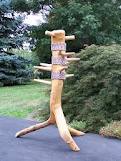
The Martialarm is a training device that gives a workout and develops your side fighting long range skills. Long range is the first entry into your opponents space. Getting into your opponent or enemies space safely and effectively ends the fight in your favor. Or if not yet successfully ended, the fight now progresses into shorter range fighting like the Wing Chun Kung Fu style of combat.
The Wooden dummy is the traditional wing chun kung fu martial arts training partner since the start of wing chun in China. The Wooden Dummy with a Martialarm attached makes the ultimate long range and short range combat and workout partner.
Please Facebook us or tweet a comment about us!
Tweet or add us to your Google Circles .

  The Martialarm |
|---|
Sunday, August 19, 2012
Eskrima Martial Arts Training 1yr Course Cebu Philippines
5 obvious reasons for coming to train with us in the Philippines
Arnis - Northern Philippines | Eskrima - Central Philippines | Kali - Southern Philippines - Advanced Balintawak Course Available!
1. Cebu Island in the Philippines probably has more Grandmasters per capita of anyplace on planet Earth. Here we have Fathers who taught sons who in turn taught their sons and in turn their sons. A true authentic lineage in martial arts excellence only now, within the last few years, is this knowledge available to be learnt by Westerners.Why not just inquire today? Send us an email
2. The Philippino martial arts systems are designed for real self defense forged over hundreds of years of life and death battles between the competing islands and clans. The Filipino martial arts systems are unique, sophisticated and devastating in effect. This is not an exercise or a dance lessons designed as martial arts for kids often found in the West.
3. Most martial arts training in the Western World is available twice a week perhaps a one hour lesson. Compare that to the rapid progress you can make here with our training facility. We have numerous Grandmasters and Masters training here between 2 to 4 hours everyday ready and waiting for your attendance. Become an Eskrima BlackBelt within a year with our intense training program.
4. The Philippines martial arts are extremely practical. They start with weapons like the stick, sword and knife and work through to hand to hand techniques all using the same methodology. This is a complete system not a hodge podge of mixed martial arts styles. These systems are not overly fancy and do not require any acrobatics in their moves. Anybody in any physical shape can gain from our classes - all body styles, any age at any skill level will find our training riveting, exhilarating and intensely practical.
5. Our training is very moderately priced. Under $2000 per year allows you to involve yourself up to four hours per day training, with various masters and their varying systems. Living in the Philippines is also cheap and we arrange a one year visa from $300 and simple and practical accommodation for $120 per month. Internet access, delicious foods, entertainment and travel around the 7000 islands here is also cheap and readily available. Come to an oasis and combine a holiday and martial arts!

WHAT WE DO: We invite you, greet you on arrival, house you, show you around the island, introduce you to martial art trainers, begin you within our school, and help you in day to day affairs - You can do all this training while also enjoying the tropical island of Cebu Central Visayas in the Philippines.
SSMAT - skip school martial arts training: 6 months time off Uni or High School for a Street Effective Balintawak Escrima Course.
OMAT - offshore martial arts training: 1 year training in Eskrima Sticks and Open Hand Techniques
EMAT - expat martial arts training: 2 year training in Esrima Sticks, Dagger, Sensitivty and Open hand Training
Train with my personal Grandmasters in Weapons and
Open Hand Filipino Jujitsu or Pinoy/Chinese Kung Fu Styles.
"THE GEATEST TEAM OF ALL TIME"
Anciong Bacon - "Balintawak Eskrima Founder",
Maj Timoteo Maranga Sr - "Maranga Combatative ESCRIMA Founder"

Subscribe to:
Posts (Atom)